October 28, 2026
 Reading time: 9 Minutes

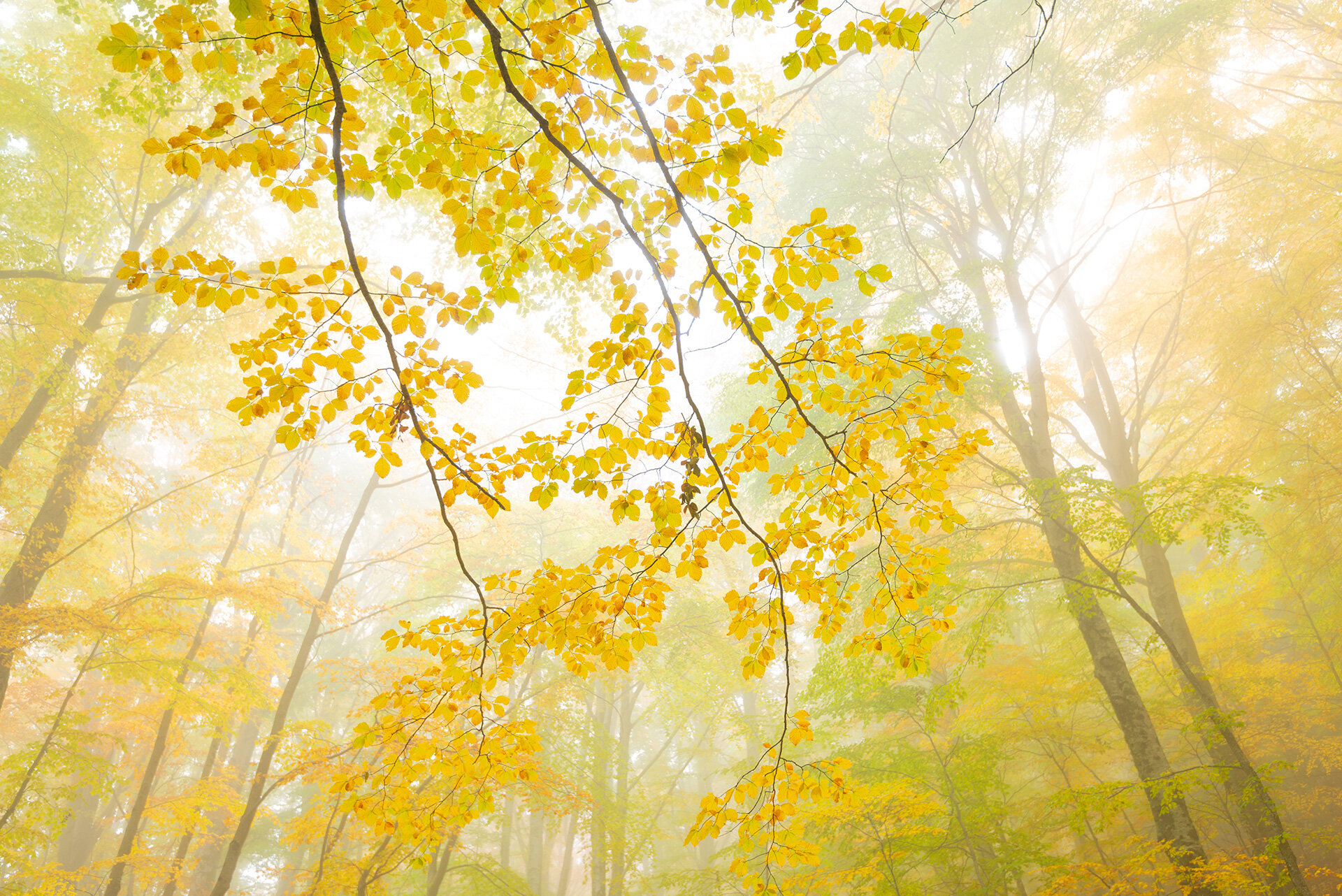
When you are surrounded by a landscape where forests take center stage, the changing seasons allow you to appreciate different shades of beauty. In the Abruzzo, Lazio and Molise National Park (PNALM), the constantly shifting colours and appearance of the trees create ever-changing landscapes, offering a picture that is never quite the same twice. It is the changing light that gently, yet unmistakably, announces when summer is about to give way to autumn.
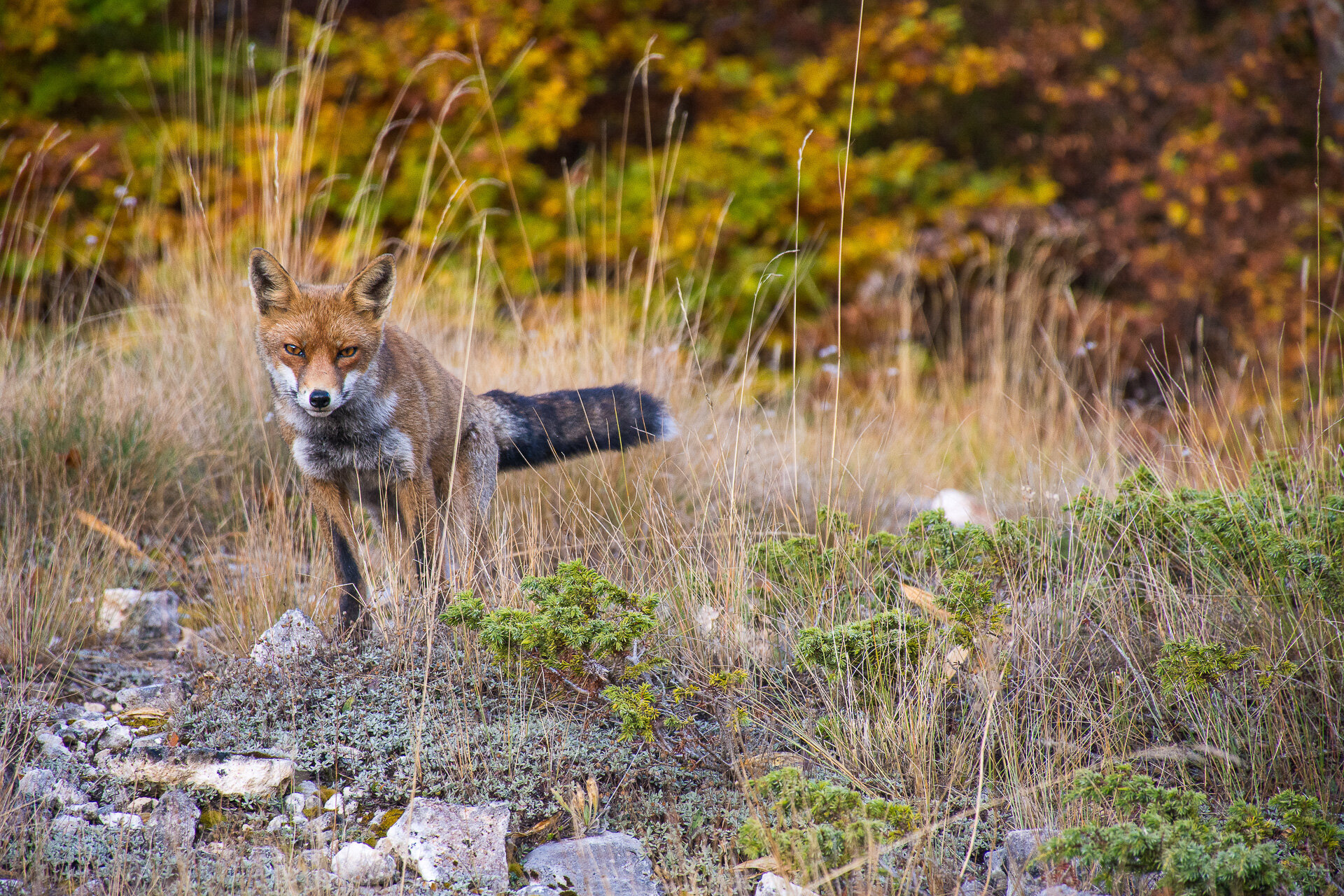
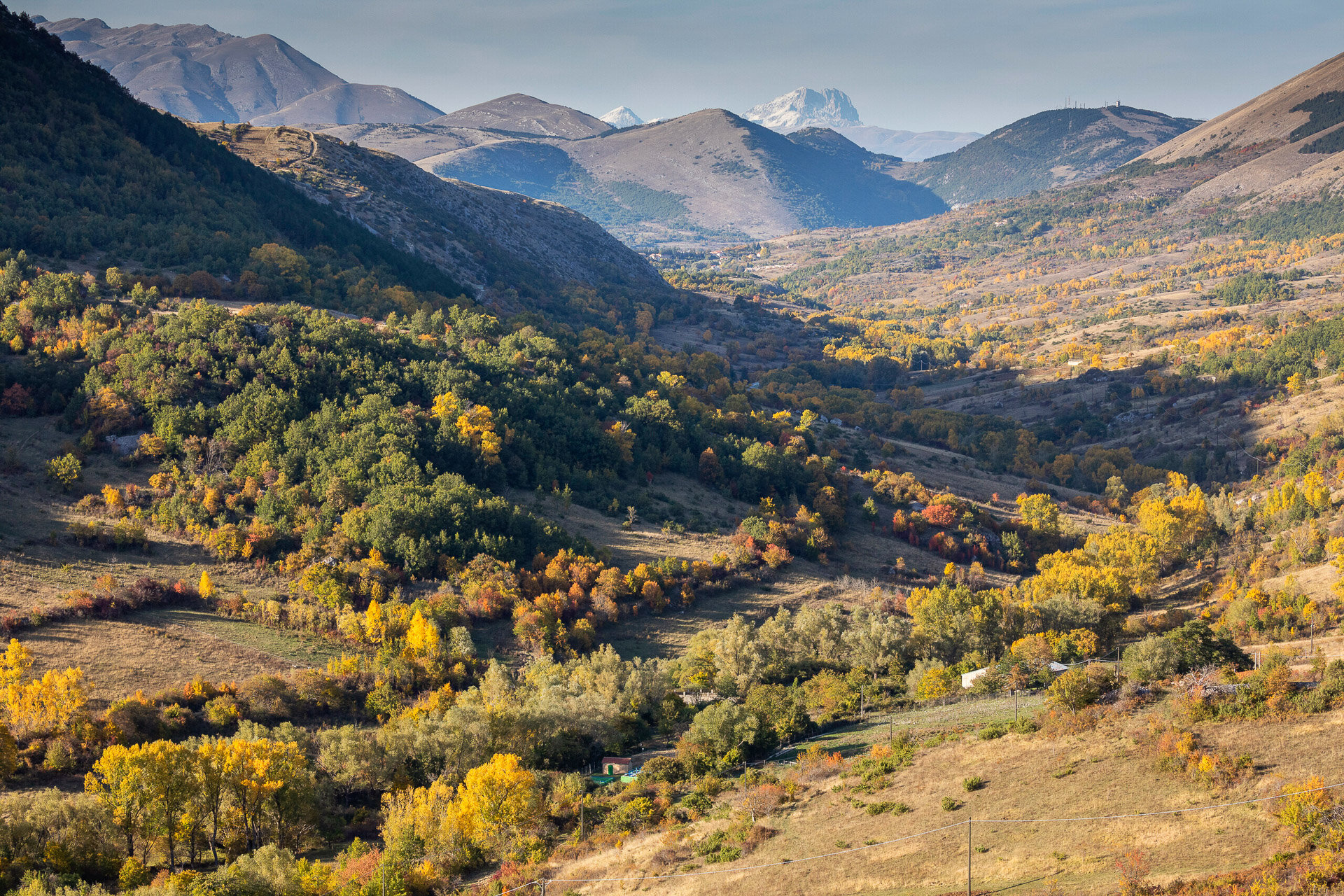
In the PNALM, the forest almost everywhere, from the mountaintops down to the valley floors, caresses the boundaries and contours of the landscape. Our gaze cannot reach every shady corner of the forest, nor explore every fold of the mountain ranges. Here, autumn arrives accompanied by the roaring of red deer stags, the frenzied feasting of Marsican brown bears and, above all, the golden light of October skies. Leaves take on warm colours and evocative shades, and for a few short weeks nature puts on an extraordinary display before the trees enter dormancy, preparing elegantly for winter.
Below, we present five different routes that offer a red carpet through the autumn rooms of the park's forests. These carefully selected trails reveal a variety of horizons, landscapes, sounds and colours, leading you to the heart of the autumn experience while offering a first, clear and unmistakable glimpse of the approaching winter.

Five autumn trails in the Abruzzo, Lazio, and Molise National Park
1. The Valley of Six Maples: Valle Viata and Monte Marrone (1,805 m)
Distance: Approximately 10 km
Estimated walking time: 5 hours (M5–M7 trail, round trip)
Elevation gain: 800 m
Difficulty level: E (hiking)
Starting point: Near Loc. Monumento (parking area at 1,013 m above sea level, Castelnuovo al Volturno)
Our first suggestion is an ideal cross-section of the landscape, taking you through some of the oldest woodlands and showcasing remarkable forest diversity. You will find yourself in the southern sector of the PNALM, where administrative, historical, strategic and, above all, natural boundaries mark the transition between different environments and cultures. Consider, for example, that this is where the northern limit of the distribution of a remarkable tree species can be found: Lobel's maple (Acer cappadocicum subsp. lobelii), whose elegance, particularly evident in the lightness and balanced shapes of its leaves, never ceases to captivate. Its presence is all the more precious because it highlights a richness of European forest biodiversity that can be admired nowhere else in quite the same way: six different maple species, all native to Italy, growing in a single valley. This botanical wealth bears witness to the extraordinary diversity of natural environments in central and southern Italy.
Beyond the ecological subtleties, what hikers will appreciate most about this route is the wealth of colours offered by a forest so richly characterised by maples. From the first days of October, shades of yellow, orange and red will make you fall in love with this place. The ascent then unfolds through a succession of ancient beech trees (Fagus sylvatica), each with its own distinctive trunk shape and crown architecture, until you reach the high-altitude pastures and rugged ridgelines. Here, the view towards Alto Sannio is almost mythological in its beauty.
These mountains also preserve traces of heroic episodes from the Second World War, as well as stories of spiritual and personal retreat. Among them is that of the French painter Charles Moulin, whose hut can still be visited by taking a short detour south-eastwards along the ridge of Monte Marrone. In this place, autumn reveals a character that is both European and distinctly Italian, where the richness of nature blends with history and the beauty of the landscape. See for yourself!
2. The Tre Confini Route from Canneto: the deep, crystal-clear Valley of the Goddess of the Waters
Distance: Approximately 16 km
Estimated walking time: 6 hours (F2 trail)
Elevation gain: Approximately 600 m
Difficulty level: E (hiking)
Starting point: Near Loc. Madonna di Canneto (parking area at 1,010 m above sea level, Settefrati)

If walking through the natural corridors of a forest can ease the inevitable fatigue of a hike, the sound of flowing water provides the perfect soundtrack to soften the effort of the climb. The Melfa, the river flowing through this enchanted valley, winds like a long ribbon of clear, contemplative water between the two natural landmarks that frame the beginning and end of the route.
You can start by parking at the Sanctuary of Madonna di Canneto, a building with a solid, harmonious façade that gives physical form to the spiritual devotion inspired by the waters of this area, which have long been essential to the economy and everyday life of ancient communities. Along the way, you will admire towering beech trees and sycamore maples (Acer pseudoplatanus) reaching heights of over 30 metres, carpets of moss and cool, shady woodland. At this time of year, the stream bed is embellished with a layer of copper-coloured leaves, especially beech leaves. Thanks to the transparency of the water flowing over them, they hardly seem submerged at all. The result is a spectacular interplay of colours, alternating between the red of the foliage and the green of the moss.
The upper part of the forest, once sacred to the goddess Mefitis, opens into pleasant clearings, while views of the mountain ridges mark the watershed between the park's main slopes. As you follow the trail, pay particular attention to small puddles and muddy patches, where you may spot the tracks of a passing bear. There is no need to be afraid, however, if you take the appropriate precautions. The Marsican bear that inhabits these forests is among the most peaceful of brown bears. Spotting one, even for just a few seconds, is one of the least likely yet most thrilling experiences this area has to offer.
3. The Difesa Woods in Pescasseroli: the beating heart of Europe's Beech Forests
Distance: Approximately 6 km
Estimated walking time: 2 hours (C2 trail)
Elevation gain: Approximately 150 m
Difficulty level: T (touristic)
Starting point: Near Valle Cupa (parking area at 1,140 m above sea level, Pescasseroli)

Pescasseroli is an elegant mountain village watched over by the ghostly ruins of a castle overlooking the upper reaches of the River Sangro. Its urban layout and architectural heritage, preserved over at least eight centuries, give it the charm of a place that has managed to retain its identity despite the changes brought by modern life. Its good fortune lies in its position within a mountain basin, at the heart of an interconnected network of beech forests that today represents one of the park's greatest natural treasures. From Val Fondillo, near the neighbouring village of Opi, to the Difesa Woods (Boschi della Difesa, in Italian), and from Selva Moricento to the ancient beech forest of Valle Cervara, there are numerous destinations within walking distance for those who love exploring on foot. Alternatively, a short drive can bring you closer to the trailheads.
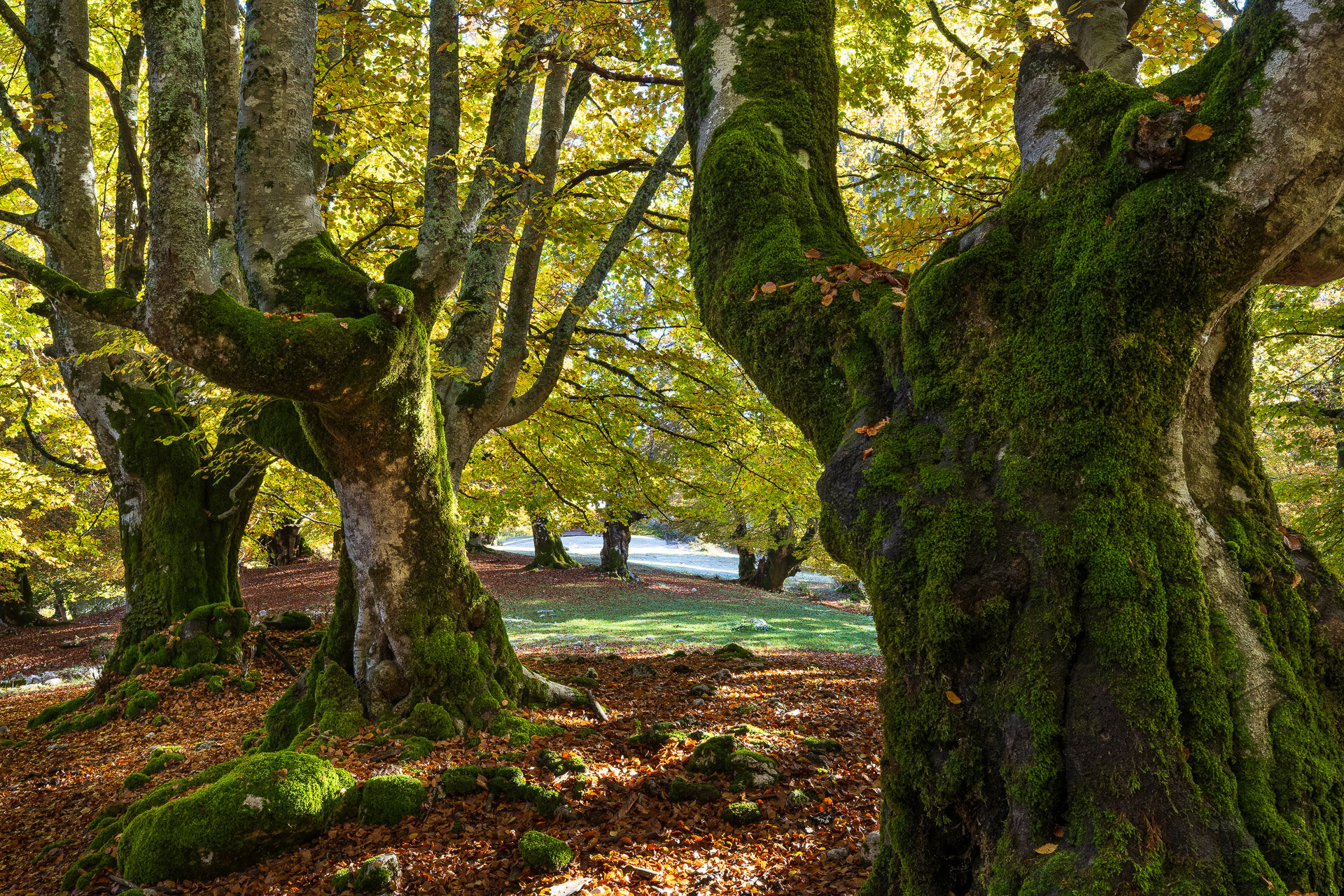
In autumn, the village's unhurried rhythm and the warmth of its restaurants and homes, already heated by the first fires of the season, blend beautifully with the colours of the surrounding woods. Their warm hues envelop the landscape, while the aroma of freshly baked bread drifts through the streets. You can begin your walk directly from Pescasseroli's main square, enjoying a view of the ruins of the old watchtowers before heading towards the village's southern outskirts. Here, you will enter the evocative, ancient landscape of the monumental beech forest of Bosco della Difesa. The trees' picturesque forms are the result of an interaction between the species' natural characteristics (it tolerates shade and creates cool woodland environments) and centuries of human intervention. The beech trees, with their stocky trunks and great age, display shapes influenced by the practice of pollarding, which over the centuries has produced predominantly candelabra-like forms alongside more slender trees. The latter have become more common following the recent abandonment of traditional woodland management practices.
The park's C2 hiking trail winds through some of the most spectacular areas of this forest, which has been used for centuries as open grazing land for cattle and horses. Even today, you may encounter small groups of sturdy horses — take a look at their powerful hooves! — well suited to demanding work, including transporting firewood.
From the larger clearings, which remain green thanks to the mild, damp days of late autumn, the view extends across the wider landscape to the mountain ridgelines where wolves, bears, eagles and griffon vultures live in the wild. For an inspired mind, simply imagining these animals in their traditional strongholds may be enough. And when the landscape's spellbinding beauty combines with the shadows slowly descending from the mountains and stretching across the forest, you will naturally feel drawn back towards the village, where you can enjoy a well-deserved break at one of the historic centre's establishments that still offer excellent food and hospitality.
4. From one village to another: crossing Terraegna from Pescasseroli to Bisegna
Distance: Approximately 20 km
Estimated walking time: 6 hours (A1 trail)
Elevation gain: Approximately 650 m
Difficulty level: E (hiking)
Starting point: Pescasseroli (1,166 m above sea level)

If you feel like immersing yourself in the mountains and forgetting, at least for a while, that you live in the modern world, we recommend this crossing through the extensive beech forests between the territories of Pescasseroli and Bisegna. The route follows mainly forest tracks and dirt roads called carrarecce (traditional cart roads once used by agricultural wagons) which have been used for transporting timber and are generally easy to walk along.
Its true value, especially for tree enthusiasts, lies in the extraordinary variety of forest environments, which people have used in different ways over the centuries. You will cross heavily grazed wood-pastures and patches of high forest before reaching scattered stands of ancient beech trees, where at least two generations of trees still survive, having almost entirely disappeared elsewhere. The observant, discerning eye will be able to read the different stages and methods of exploiting and conserving one of the most important resources for mountain communities: their timber wealth.
The area lies within one of the core areas of the Marsican brown bear, as well as at the crossroads between the territories of at least two wolf packs. Golden eagles and griffon vultures can be spotted along the ridgelines, while hikers crossing the vast grassy plateaus during the first weeks of autumn are likely to hear the powerful roars of red deer stags at the height of the breeding season. Halfway along the route, just beyond Pietra del Principe (1,800 m), a solid stone block bearing the sixteenth-century coat of arms of the Piccolomini family, the Terraegna mountain hut offers a welcome opportunity to rest and, if needed, an excellent chance to spend the night in the absolute silence of the remote Apennines. We recommend checking availability in advance.
Here, you may hear wolves howling or even, if you can resist lingering too long over a good meal and conversations around a glass of red wine, catch sight of one. The route then continues downhill, with opportunities to take scenic variations along the ridgelines, until Bisegna comes into view in the distance. This fortified village stands on a natural terrace overlooking the Giovenco Valley, at an altitude of over 1,200 metres. There is a small bar in the village run by Antonio and his father, and nearby you can admire the magnificent frescoes inside the Parish Church of Santa Maria Assunta in Bisegna. The bus stop that will take you back to Pescasseroli is also close by. Be sure to check the bus timetable in advance so that you can plan your time efficiently!
5. Quercus in Fundo! A (nearly) beech-free morning in the Giovenco Valley
Distance: Approximately 11 km
Estimated walking time: 3 hours (V3–V4 trail to San Sebastiano)
Elevation gain: Approximately 200 m
Difficulty level: E (hiking)
Starting point: La Sorgente (1,310 m above sea level, along SP 17, north-west of Valico del Templo)

It is understandable that, in a park renowned for its outstanding beech forests, other types of vegetation might be somewhat overlooked. In reality, alongside the beech woods, the park is also home to wonderful native pine forests (which, however, are all located within strictly protected nature reserves) and small stands of European hop-hornbeam (Ostrya carpinifolia). To break the pleasant monotony of the beech forests, we suggest a relatively easy route leading to a plateau where stands an ancient place of worship dedicated to Saint John the Baptist, long revered by the people of the Marsica region.
Before reaching the spring and the little church, whose pleasant architectural features date back to the seventeenth and eighteenth centuries, you will pass through several small stands of deciduous oak trees — Turkey oaks and downy oaks (Quercus cerris and Q. pubescens) — including scattered specimens with beautiful shapes and graceful forms. These are complemented by rowans and maples, which contribute to another palette of colours in Abruzzo's autumn landscape: variations of yellow and orange, occasional flashes of deeper red contrasting with the dark green of junipers, and the many possible colour combinations offered by the small leaves of wild apple and pear trees. These habitats are particularly frequented by wild boar and bears, which find abundant food here. Keep an eye out for signs of their presence and, above all, always remain on the official trail. Towards the end of the route, you will reach the picturesque village of San Sebastiano dei Marsi, situated at an altitude of approximately 1,100 metres. The village unfolds across two scenic levels and preserves valuable examples of late medieval architecture, along with an urban layout that evokes the atmosphere of a bygone era. Nestled in a valley where natural balances still seem largely undisturbed, the village provides an evocative ending to the hike. From here, you can catch a scheduled bus back to your starting point.