A weekend with an overnight stay at Rifugio Franchetti, taking us into the heart of the Parco Nazionale Gran Sasso e Monti della Laga150,000 hectares of protected land, vast, wild and unforgiving, where rock and water are the undisputed protagonists. Gran Sasso is limestone country: on the Teramo-facing flank, dense beech forests descend all the way to the sea; on the Aquila side, the massif gives way to the boundless pastures of Campo Imperatore. On the Monti della Laga, sandstone reigns supreme, and waterfalls and streams run bright and shallow through the meadows and woods below. Both are vast territories, offering shelter to wildlife. Along the route, rock faces close in around the walker while the silent Laga shimmers on the horizon.

ITINERARY

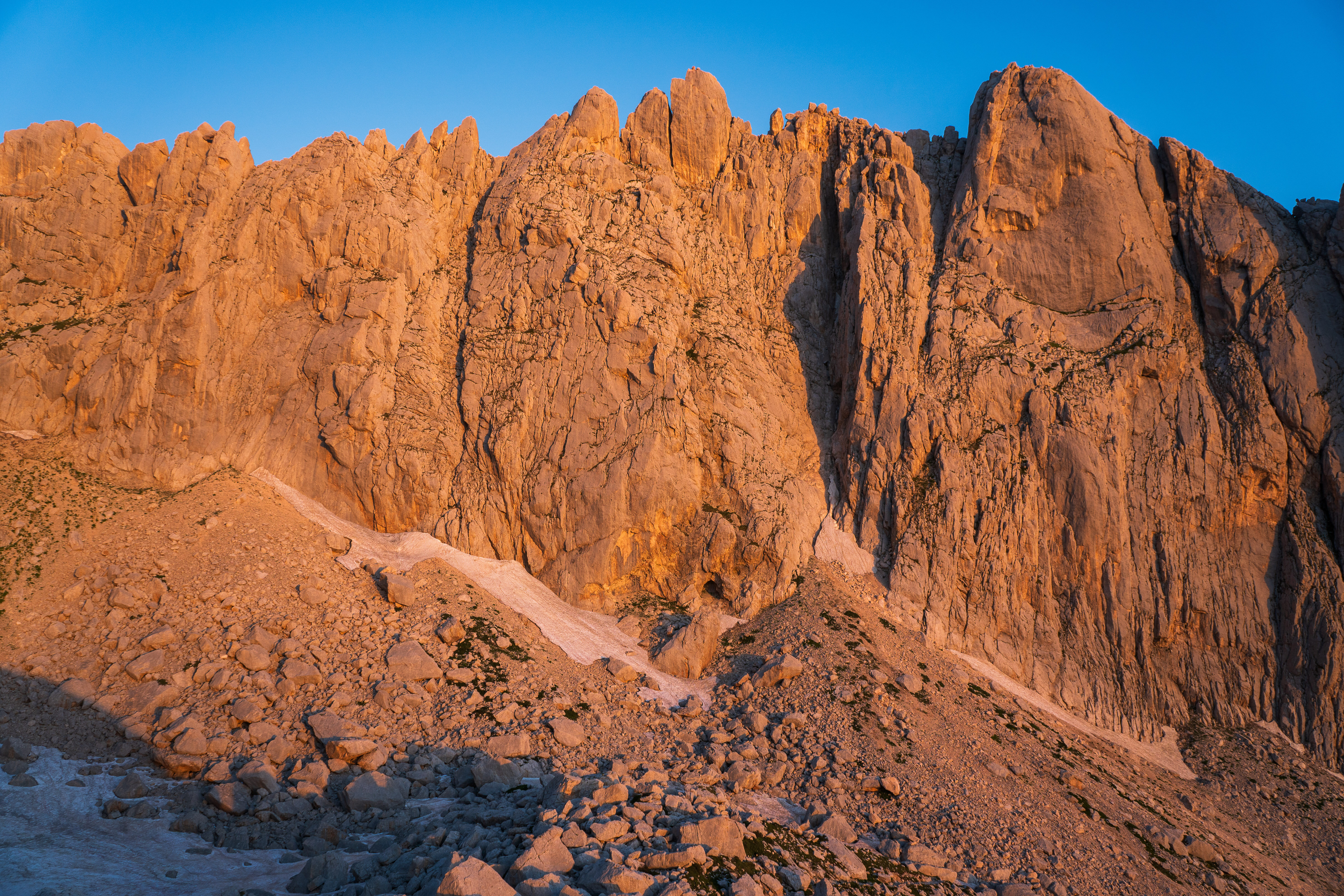
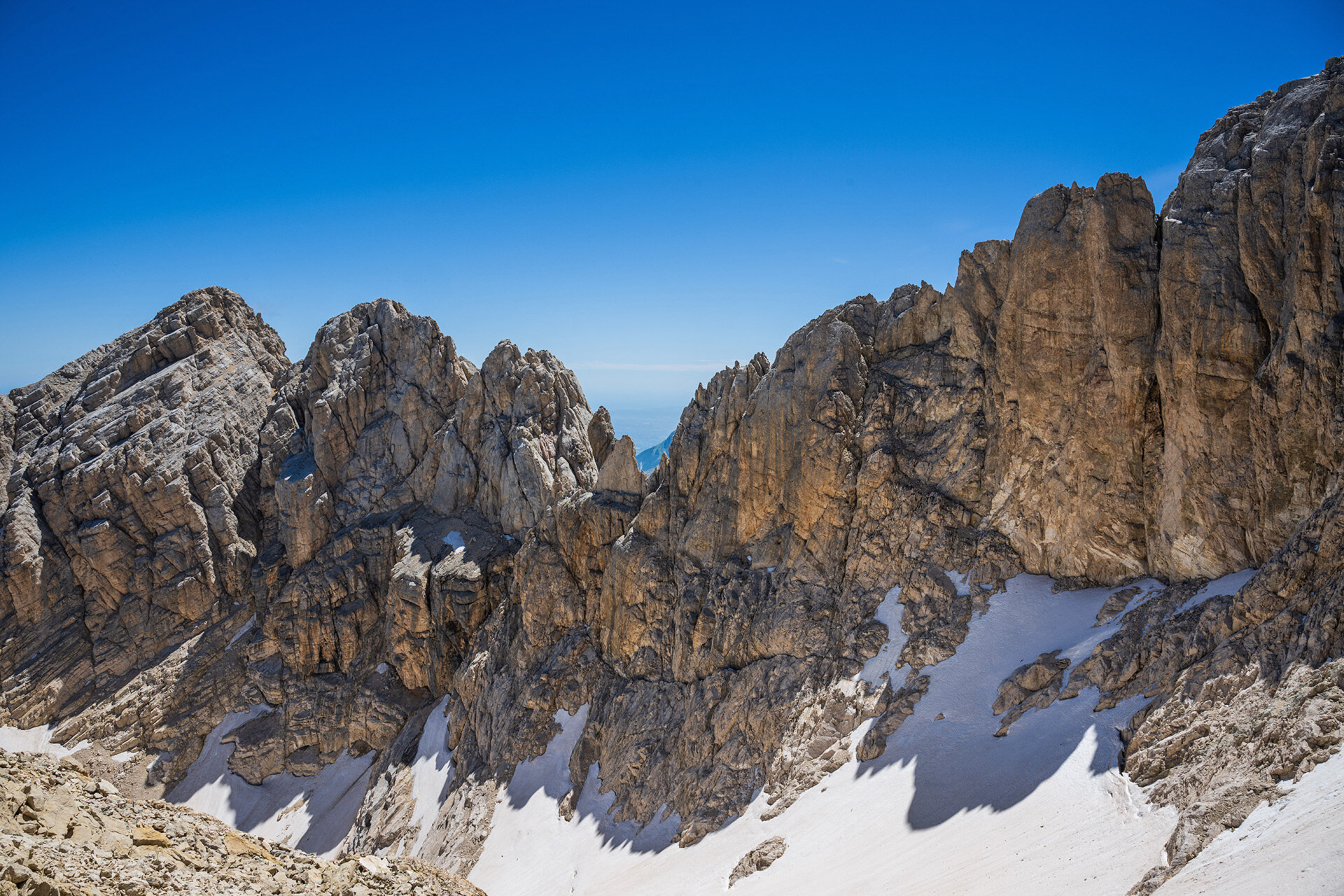
Corno Grande cliffs and snowfields of the Calderone Glacier on Gran Sasso | © Umberto Esposito - Wildlife Adventures
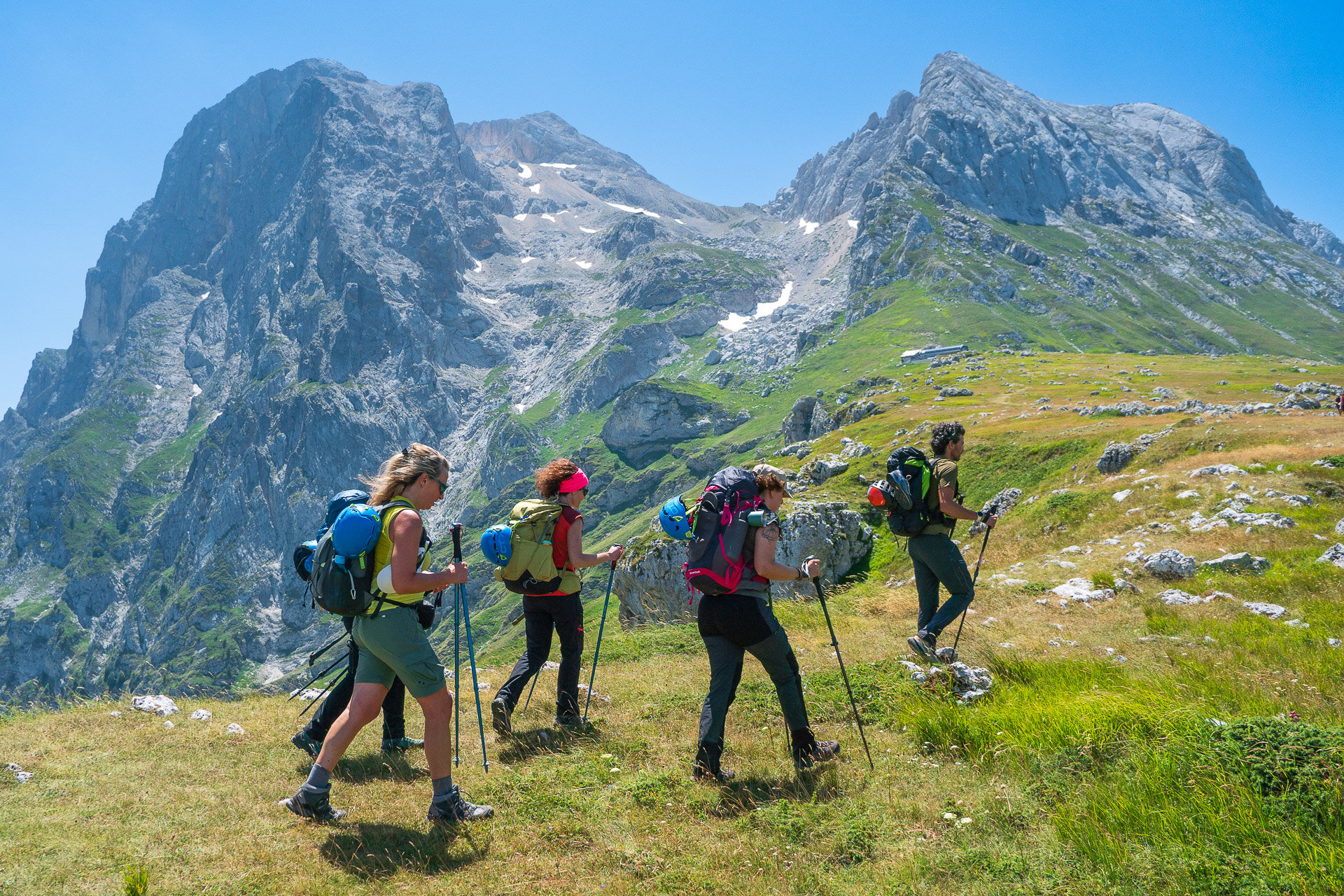
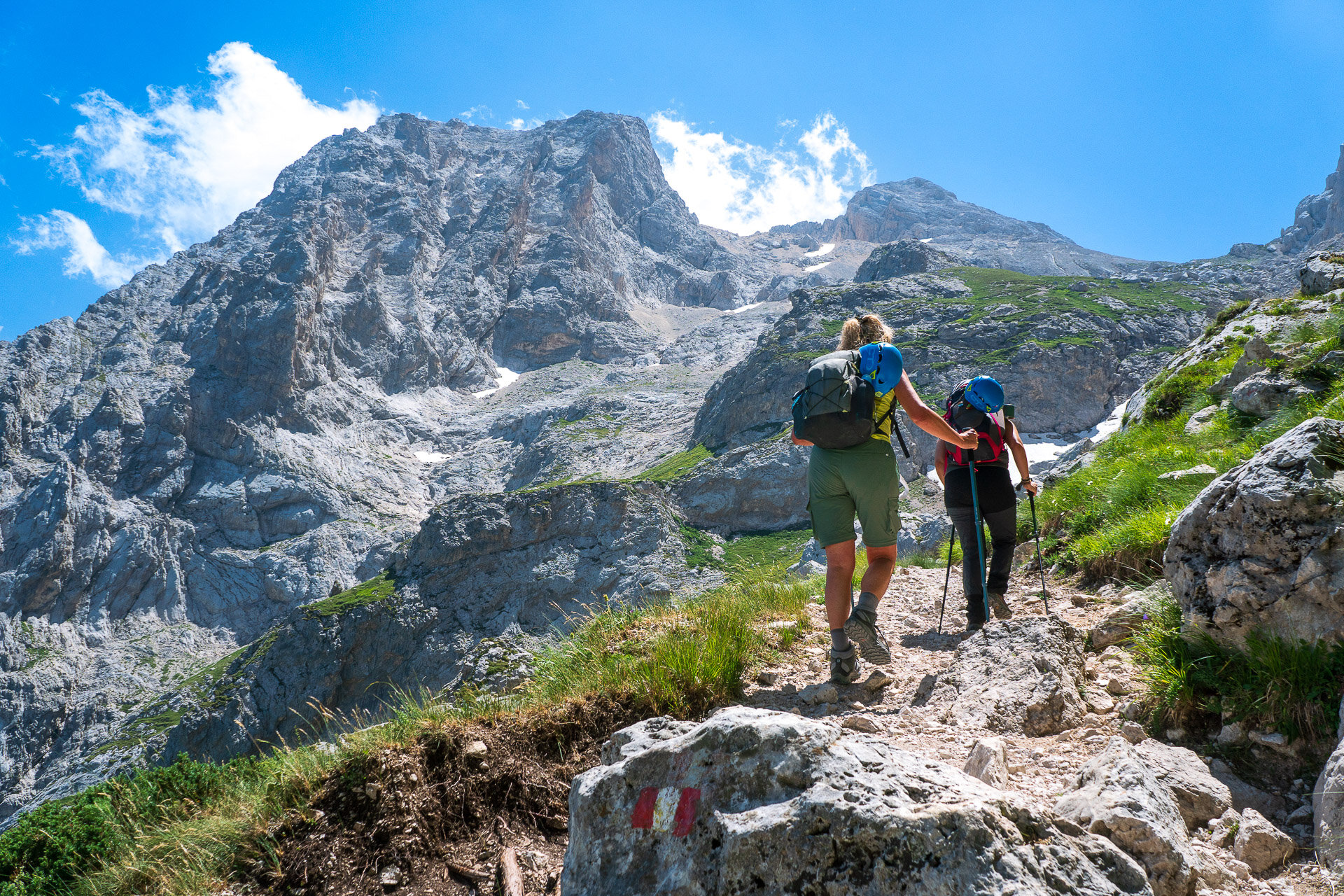
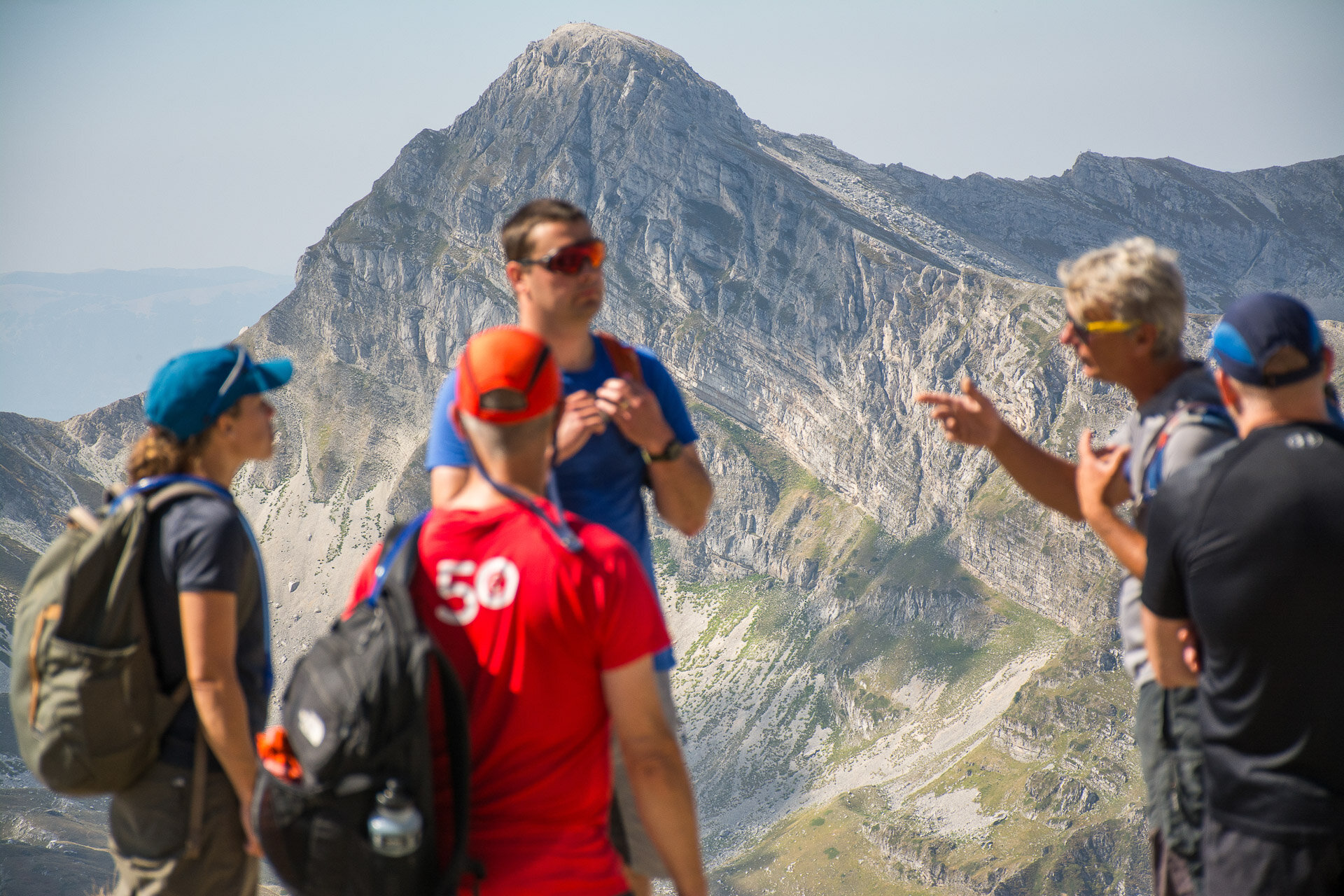
Escursionisti in sosta lungo il sentiero della via normale del Gran Sasso, circondati da paesaggi montani spettacolari | © Filippo Castellucci - Wildlife Adventures

Highlights

The Calderone, nestled in the north-eastern basin of Corno Grande at over 2,650 m, is the only glacier in the Apennines and the southernmost in Europe. Today it has sadly been reduced to a small body of ice and permanent snowfield.
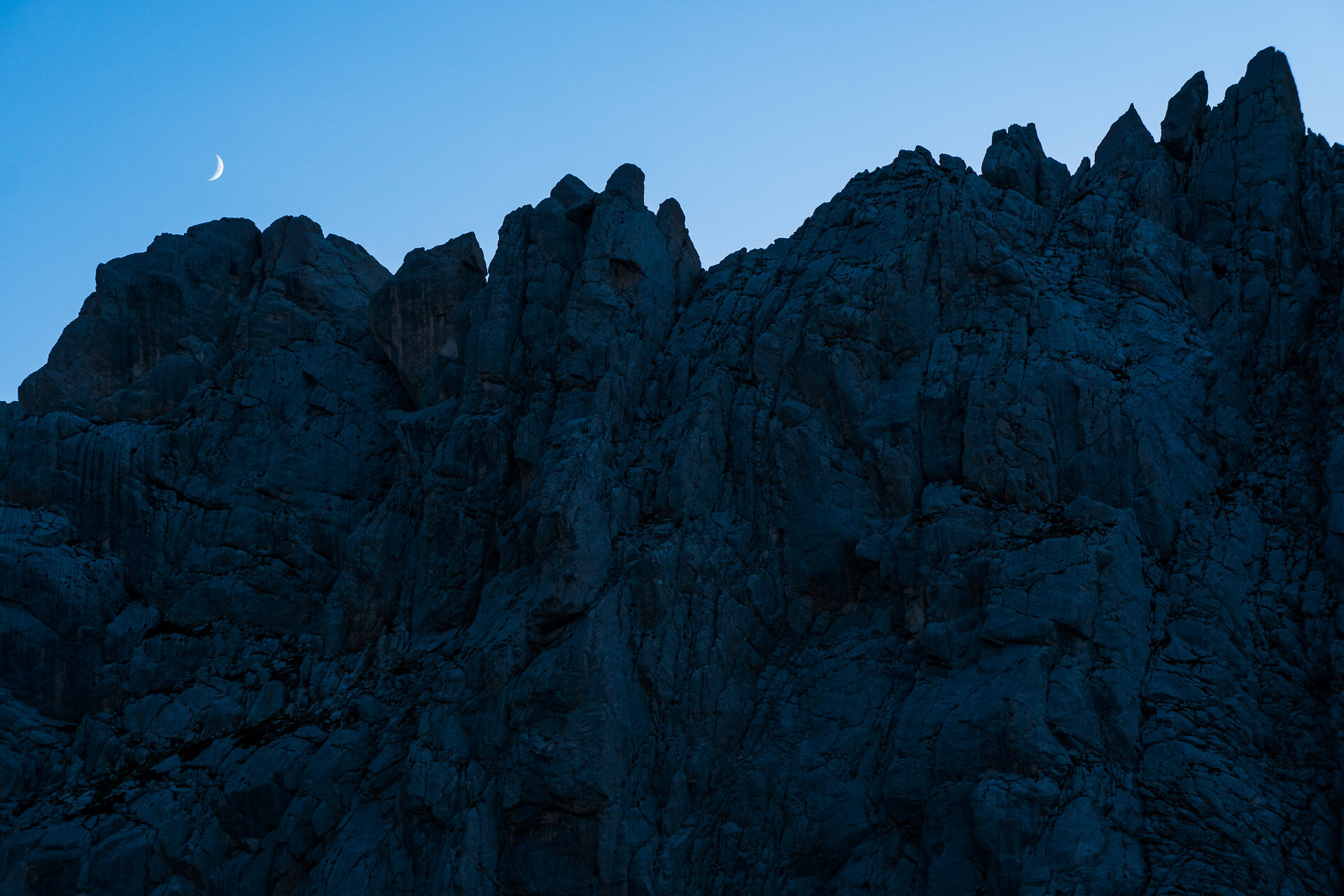
The Adriatic-facing flank of Gran Sasso is the most severe expression of the entire massif. Limestone spires, raw rock gullies and vertical faces dominate a landscape that offers no compromise, where dense beech forests descend all the way to the sea.
The Apennine chamois, reintroduced to Gran Sasso in 1992, regularly frequents the cliffs and scree slopes of the valley: herds often approach the trail with a nonchalance that sits in sharp contrast to the verticality of the terrain around them.

Costs

from 175,00 €

What's included

Guide and organization
Professional liability insurance
Accommodation in a mountain cabin
Dinner and breakfast
Internal transfers

What is excluded

Lunches
Personal Travel insurance
Extra and personal expenses

This trek is suited to people in good physical condition, accustomed to walking in the mountains for several consecutive hours and to handling demanding ascents: the two days involve 800 m and 570 m of climbing respectively, requiring well-trained legs and a steady head. It is recommended for those who already have experience of moderately difficult mountain hiking and are comfortable on ridge paths. It is not suitable for anyone who suffers from vertigo.

The pace will be that of the group, and the guides will find the right rhythm for everyone, with breaks to recover and take in the landscape.

To tackle the route safely, high-ankle trekking boots with a rigid sole— already broken in, not new — are essential, along with layered clothing appropriate for high-altitude hiking: conditions at altitude can change rapidly, even in summer.

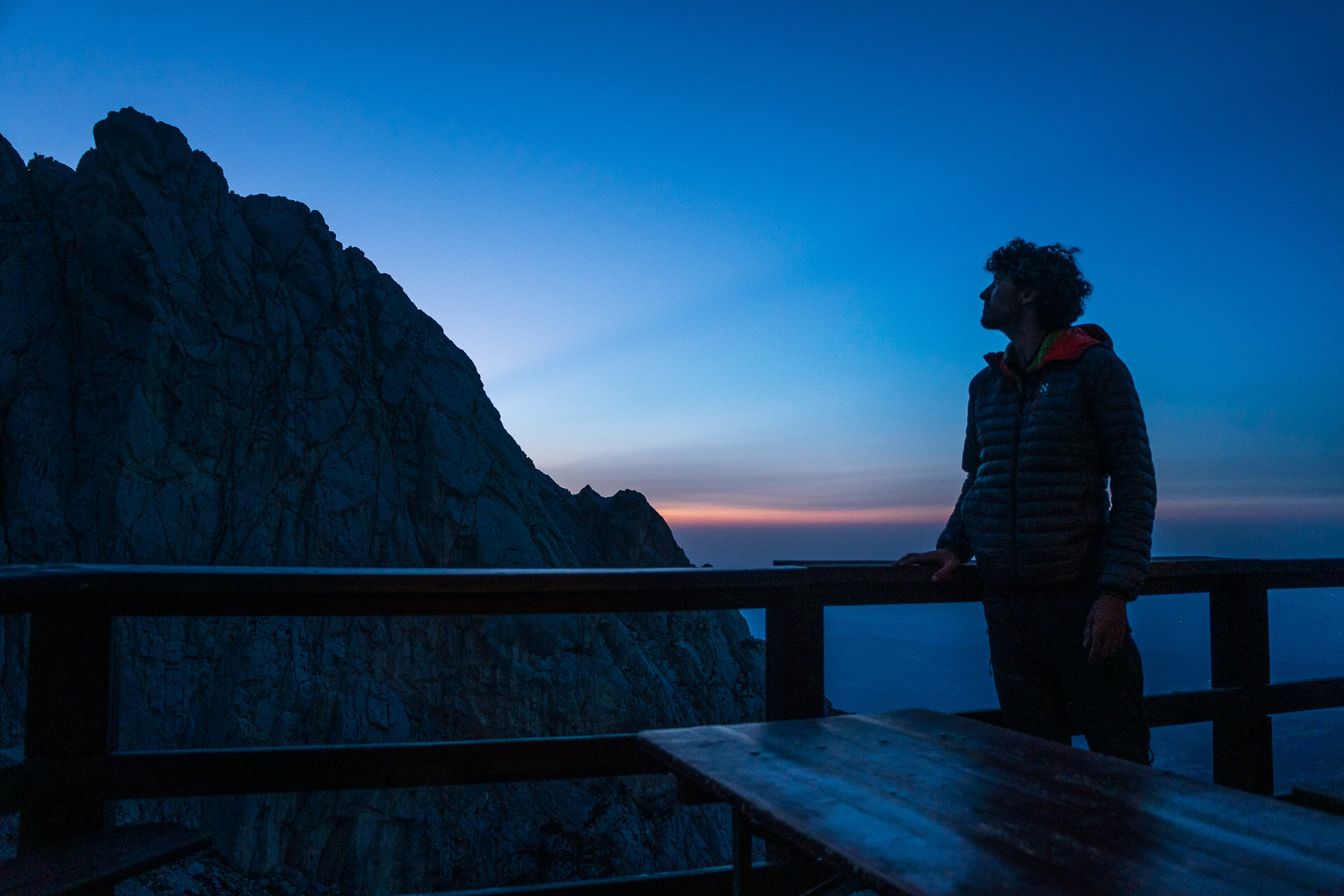
The mountain hut overnight is very much part of the experience: you sleep in a shared dormitory, in a spare and authentic setting where the mountain makes itself felt even in the conviviality of the evening — dinner made with local produce, conversation around the table, waiting for dawn, and the silence. Those looking for the comfort of a private room may not find it here; but those who can appreciate that particular atmosphere that forms between tired, satisfied people will not easily forget it.

Please let us know in advance of any particular physical conditions or specific dietary requirements, so that we can assess together whether the route is a good fit and ensure a safe, enjoyable experience.

Essential tips and useful details for a smooth and enjoyable stay

These hikes, including the trekking experience with an overnight stay at Rifugio Franchetti and the excursion to Corno Grande and Gran Sasso, require a good level of physical fitness. We recommend dressing in layers so you can adjust your clothing throughout the day. At sunset, even in the height of summer, warm and windproof clothing is essential. Hiking boots are mandatory—ideally waterproof—and participants without proper footwear may not be allowed to join the trip.

CLOTHING
Waterproof jacket with hood
Warm jacket
Lightweight trousers
Lightweight t-shirts
Worn in hiking boots or shoes
Warm hat
Thin gloves

BAG AND SLEEPING
Rucksack (30+ liters)
Sleeping bag liner
Ear-plugs
Personal first-aid kit
Personal items (biodegradable toiletries, sanitary wear etc)
Quick-dry towel
Alcohol hand-gel
Sun protection (hat, sunglasses, sunscreen)
Water bottles or water bladder (at least 1 l)

Whether you are going on a day hike or a multi-day trip, it is essential to prepare properly to ensure your safety and enjoyment. See our guidelines on how to equip yourself for each season.

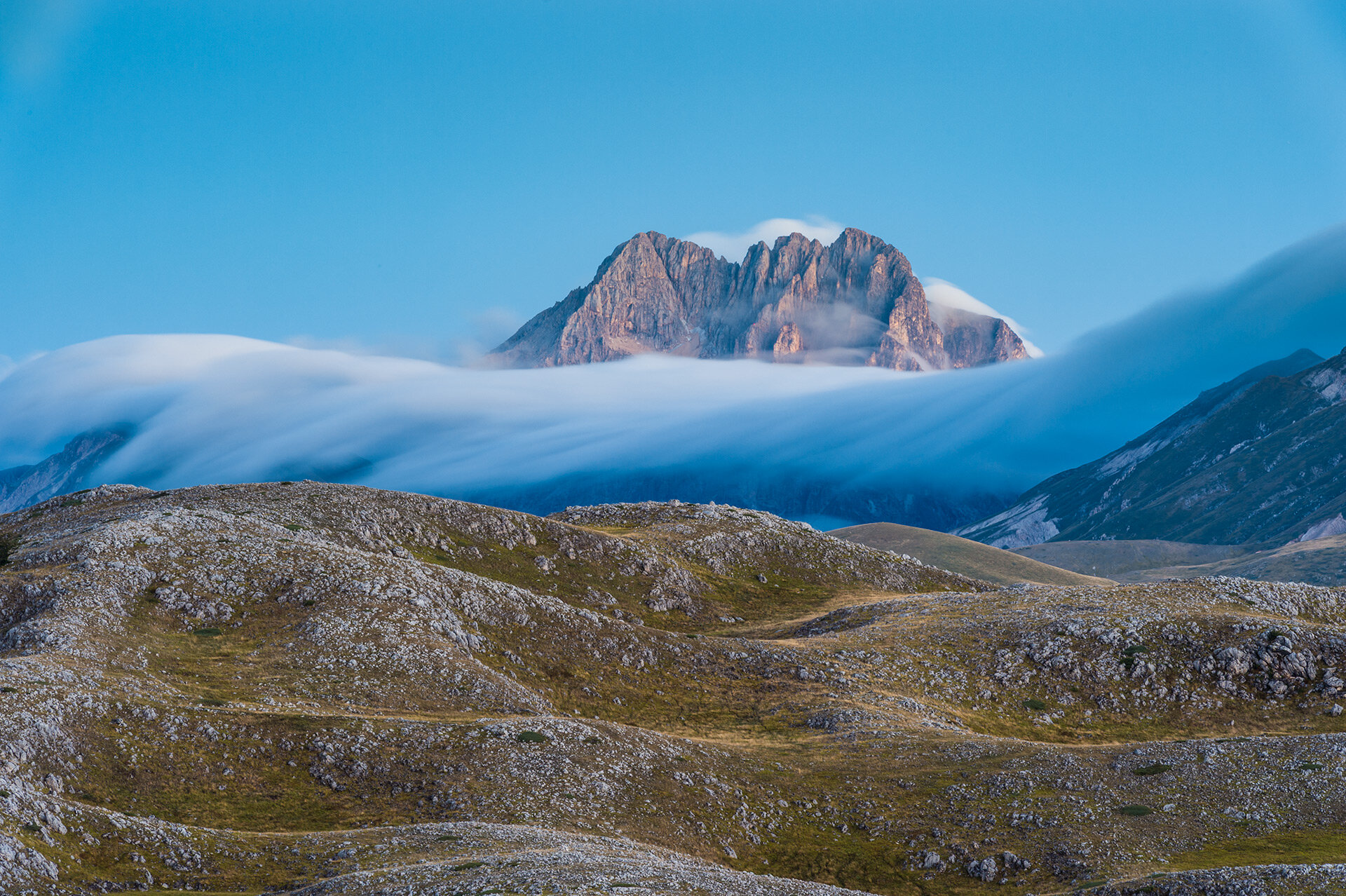
Corno Grande on Gran Sasso rising above a sea of clouds, viewed from Campo Imperatore | © Maurizio Biancarelli - Wildlife Adventures

The Rifugio Carlo Franchetti, at 2,433 metres above sea level, is the highest mountain hut on the Teramo-facing flank of Gran Sasso, wedged between Corno Grande and Corno Piccolo in the heart of the glacial valley of Vallone delle Cornacchie. Built entirely from limestone and wood by the CAI Roma section, it was inaugurated in 1960 and named after Baron Carlo Franchetti, mountaineer and speleologist. It retains the austere character of a true high-altitude refuge: a spare, solid place, deeply connected to the mountain that surrounds it.

The two dormitories accommodate a total of 23 guests on bunk beds and sleeping platforms, in a convivial atmosphere that comes naturally to life in the evening, among people who have spent the day walking beneath the great massif. No private rooms are available. Here, comfort gives way to simplicity, allowing guests to fully embrace the rhythm of life at altitude.

Running water at the hut comes directly from the Calderone glacier — a precious resource to be used with care. The hut has two indoor toilets and one outdoor toilet with cold water only. A sleeping bag liner or personal sleeping bag is mandatory — both are available for purchase at the hut.

Dinner and breakfast are served at the hut. The menu features simple, hearty mountain fare: charcuterie and cheese boards, oven-baked pasta, soups, meat dishes with sides, and home-made desserts. Vegetarian requirements can be accommodated: please remember to let us know at the time of booking.

The Gran Sasso is the mountain of Abruzzo par excellence. Its majestic dolomitic peaks — the highest in the Apennines — culminate in Corno Grande (2,912 m a.s.l.), Corno Piccolo, Pizzo d’Intermesoli, and Monte Camicia. It is home to the Calderone Glacier, the only glacier in the Apennines and the southernmost in Europe. To the south lies the vast plateau of Campo Imperatore, a breathtaking high-altitude karst expanse — the closest thing to Tibet you can find in Europe.

The National Park’s territory is distinctly mountainous, with landscapes often resembling the Alps. It consists of two main mountain groups: the Gran Sasso d’Italia massif and the Monti della Laga range to the north. Established in 1995, the Park covers an area of 148,935 hectares and also extends slightly into the regions of Lazio and Marche. Its vegetation includes beech forests on the Laga Mountains (with silver fir) and on the Teramo side of the Gran Sasso, alpine meadows in Campo Imperatore and on the Voltigno plateau, and magnificent high-altitude wildflower blooms.

Nature, however, is not the only attraction here: the Park stands out for its deep and harmonious interweaving of natural beauty and human presence, creating a landscape where the two are inseparable.

Corno Grande on Gran Sasso rising above a sea of clouds, viewed from Campo Imperatore | © Maurizio Biancarelli - Wildlife Adventures

This trip generates an average of 26 kg of CO2 emissions per person, including all local transport, accommodation, food, activities and guides. 

But what does that mean? 

Is it still difficult to understand your impact on the planet? To get a fuller picture:

  • Driving 1000km in an average car is equivalent to about 300kg of CO2 (or 150kg per person if there are two of you). 
  • A return economy class flight between London and Rome Fiumicino is equivalent to about 670 kg per person. 
  • It is estimated that 10 trees in a temperate forest remove about 250kg of CO2 from the air over a period of 5-10 years. 

What are we doing?

We are working with all our partners and suppliers to develop long-term carbon reduction plans. We are working with Rewilding Apennines to ensure that this journey achieves net zero emissions by supporting their programmes and ensuring the protection and restoration of natural environments outside protected areas.

Thank you

LBL_MAILINGLIST_CONTROLLA_EMAIL_ATTIVAZIONE

Something went wrong

Please try again

Close

Newsletter subscription